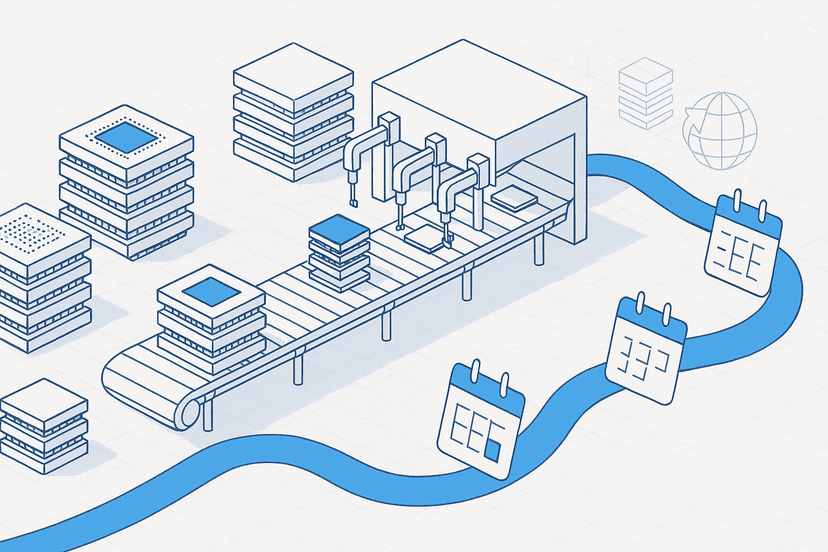
GPU HBM and Packaging Risk
Examine supplier commitments, bottlenecks, and delivery exposure.
Explore solution →
System modeling
Data Center Reality Check and supporting system models
Assess a project's power, cooling, compute, permissions and financing as a connected system. See which conditions are supported by evidence, which remain uncertain and what a change could affect.
Commission a Reality Check independently or use it to ground a decision model. Existing engineering models and project data can be incorporated where they fit the scope.
Grounding the choices in the project
Consider a data center developer proposing a 120 MW campus with a 60 MW first phase. That first phase only works if the network, campus design and tenant demand support it. A system model makes those dependencies explicit.
A commitment is not a realized system change.
Signing for 60 MW changes the contractual position. It does not make 60 MW available. The models keep commitments, simulated effects and verified system conditions distinct.
System modeling
A model of the data center as a system of systems, presented through a top-level scorecard. See the project's conditions and dependencies, then examine the specific systems that could change the decision.
Illustrative Reality Check view of the same scenario
60 MW proposed initially. Network checks and connection milestones still need verification. A further 60 MW depends on an upgrade.
The first-phase configuration must fit. Rack density, cooling capacity and equipment delivery need to support the tenant's workloads.
Approval must cover the proposed configuration. A revised power or cooling design may change the conditions that apply.
Funding follows verified milestones. A power-delivery delay can change when capital becomes available.
Commission a Reality Check independently or alongside decision modeling. Where suitable engineering models and project data already exist, use them to ground the decision model.
System models catalog
Start with the overall Reality Check, then go deeper where the decision needs it. These twelve modeling areas cover individual systems and cross-cutting assessments, from physical infrastructure to workload demand, economics and investment risk.
2 of 12 modeling areas · Semiconductors
Examine supplier commitments, bottlenecks, and delivery exposure.
Explore solution →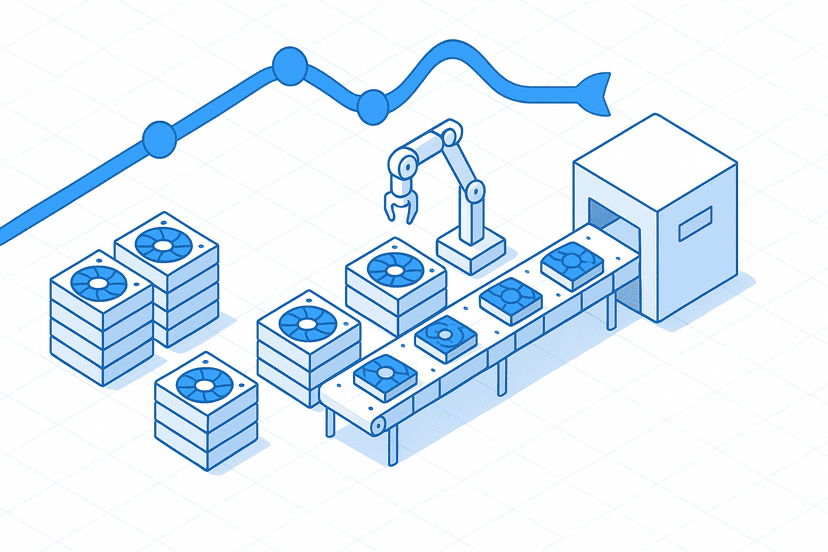
Assess supplier dependencies, concentration, and recovery options.
Explore solution →To explore how parties decide under these conditions, visit the Decision models catalog or return to Solutions.
Assess whether a named data center project is financeable, where evidence is thin, and which milestones should change terms.
View investor collateralPrioritize scarce pursuit, proposal, engineering, and equipment-window capacity across named campuses.
View pursuit collateralCheck whether a claimed load is credible, phased, serviceable, and aligned with grid deliverability.
View load collateralPressure-test commitments, schedules, counterparties, customer timing, and next milestones.
See operator use casesReview power, water, emissions, land, permits, local response, and the tradeoffs behind public decisions.
Explore impact analysisRequest a Data Center Reality Check focused on your project, its dependencies and the evidence needed for the next commitment. Agree the depth of analysis, data integration and ongoing model maintenance with us.